
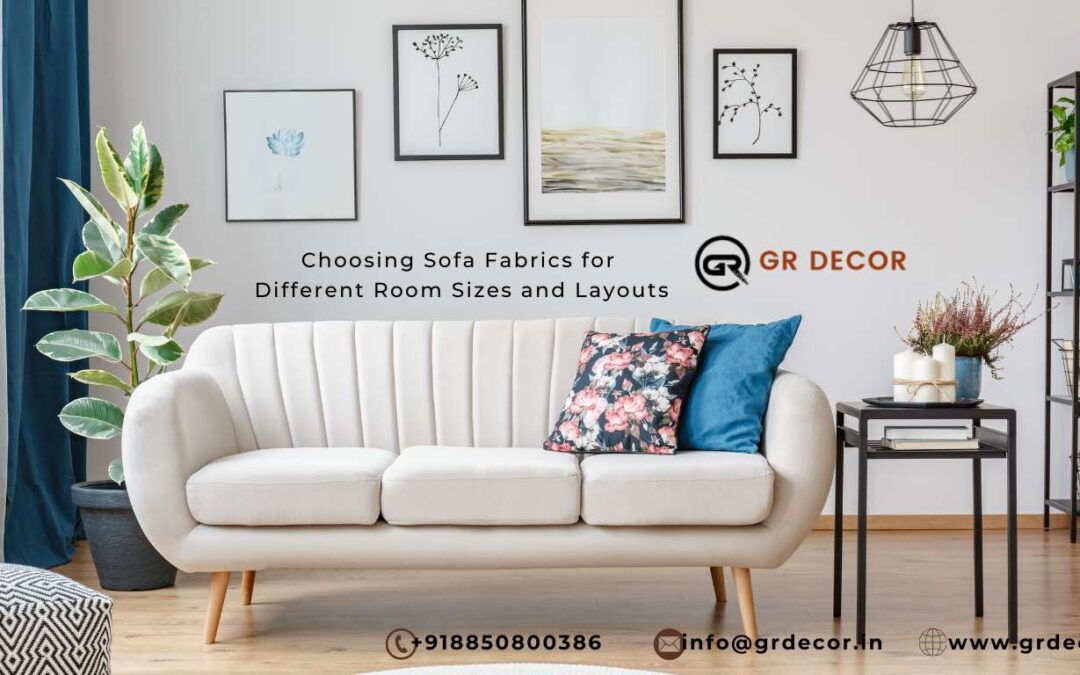
Choosing Sofa Fabrics for Different Room Sizes and Layouts : At GR Decor, we understand that picking the right sofa fabric is key to making your living space both cozy and stylish. But when it comes to Choosing Sofa Fabrics for Different Room Sizes and Layouts, it’s important to think beyond just color and texture. The size of your room and its layout play a big role in how your sofa will look and fit in your space. In this blog, we’ll guide you through selecting the ideal fabric for your sofa based on your room’s size and design.
1. Choosing Sofa Fabrics for Different Room Sizes and Layouts: Why Room Size Matters
Small Rooms: In smaller spaces, it’s best to opt for lighter fabrics. They can make the room feel more open and airy, which helps the space appear larger. Light-colored fabrics like linen or cotton are great choices because they reflect light and brighten up the area. On the other hand, avoid using bulky or heavily textured fabrics, as they can overwhelm the space and make it feel even more confined.
Large Rooms: If you have a larger room, you have more freedom with fabric choices. Heavier fabrics like velvet or chenille can add a sense of warmth and coziness, making the room feel more inviting. In larger spaces, darker tones and bold patterns can work beautifully, helping to create a focal point that ties the room together without overwhelming it.
2. Understanding Room Layouts When Choosing Sofa Fabrics for Different Room Sizes and Layouts
The layout of your room is crucial in determining how your sofa and its fabric will fit into the overall space:
Open Layouts: In open-plan spaces, where one area flows into another (like the living room blending into the dining room), your sofa often acts as a divider. In these settings, it’s important to choose fabrics that harmonize with the surrounding decor. Neutral tones or subtle patterns are ideal because they help the sofa blend in smoothly without taking attention away from other parts of the room. The idea is to create a cohesive look where every piece complements the others, making the space feel connected and balanced.
Traditional Layouts: In more traditional, closed layouts, where rooms are more defined and separated, your sofa has the potential to be a standout feature. This gives you the freedom to experiment with bolder fabric choices, such as vibrant colors or detailed patterns. In these layouts, the sofa can become a focal point, adding personality and style to the room. Just make sure that whatever fabric you choose complements the room’s overall theme and decor, ensuring that your bold choice enhances rather than clashes with the space.
3. Choosing Fabrics Based on Room Function When Choosing Sofa Fabrics for Different Room Sizes and Layouts
The function of each room in your home influences the kind of fabric that will work best for your sofa. Here’s how to choose the right material based on the room’s purpose:
Living Room: The living room is often the heart of the home, where family and friends gather, making it a high-traffic area. Comfort is a top priority here, but so is durability. You’ll want to choose fabrics that can withstand daily use while still being cozy. Microfiber is a great option because it’s soft and resistant to stains, making it easy to maintain. Leather is another excellent choice—it’s durable, easy to clean, and adds a touch of elegance. Treated cotton is also good, offering comfort and resilience, perfect for a room where the sofa gets plenty of use.
Guest Room: The guest room is used less frequently, so you have more freedom to choose fabrics that are both luxurious and practical. Velvet, with its rich texture and elegant look, can make the space feel welcoming and special. Linen, on the other hand, offers a more casual yet sophisticated feel, and it’s breathable, which adds comfort for your guests. When selecting patterns or colors, aim for something that’s inviting but not too bold, ensuring that the space feels relaxing and comfortable for visitors.
Home Office: In a home office, your sofa should align with a professional and functional atmosphere. Fabrics like leather or high-quality synthetics are ideal. Leather gives a sleek, polished look that’s easy to maintain, which is important in a workspace. High-quality synthetic fabrics can also work well, offering durability and a clean appearance that complements the professional vibe of the room. These materials are practical and can handle the occasional coffee spill or long hours of sitting, making them suitable for an office setting.
4. Matching Fabrics to Furniture Style When Choosing Sofa Fabrics for Different Room Sizes and Layouts
The style of your furniture is key to determining the best fabric choice. Here’s how to match the fabric to your furniture style:
Modern Furniture: If you have modern or minimalist furniture, your fabric should reflect the clean, straightforward lines of the design. Opt for fabrics that are sleek and simple, like leather, microfiber, or tightly woven cotton. Solid colors work well here, creating a polished and uncluttered look. Subtle patterns can also be effective if they don’t overwhelm the simplicity of the furniture. These fabrics and styles enhance the modern, streamlined appearance, making the space feel fresh and contemporary.
Traditional Furniture: Traditional furniture tends to have more ornate and detailed designs. To complement this style, choose rich, luxurious fabrics like brocade, velvet, or embroidered cotton. These materials add depth and elegance, enhancing the classic look of the furniture. Patterns such as florals, damask, or stripes are perfect for traditional pieces, bringing in a touch of timeless charm. These fabrics not only match the intricate details of traditional furniture but also elevate the overall aesthetic, making the room feel warm and inviting.
Transitional Furniture: If your furniture style falls somewhere between modern and traditional, you’re working with a transitional style. This gives you the flexibility to mix and match fabrics. Start with a neutral base fabric for the main upholstery, which will keep the look grounded and versatile. Then, you can add accent cushions in bold colors or interesting patterns to introduce some personality and texture. This approach allows you to enjoy the best of both worlds—modern simplicity with traditional warmth—creating a balanced and harmonious space.
5. Consideration of Light and Heat Exposure in Choosing Sofa Fabrics for Different Room Sizes and Layouts
The amount of natural light and heat in your room plays a big role in choosing the right sofa fabric. Here’s how to make the best choice:
Sunlit Rooms: If your room gets a lot of natural light, it’s crucial to pick fabrics that can withstand the sun. Fabrics like polyester or polyester blends are great because they resist fading even with continuous exposure to sunlight. Lighter-colored fabrics are also a smart choice for sunlit rooms; they reflect light, which not only keeps the fabric looking fresh but also helps to minimize noticeable fading over time. This way, your sofa remains vibrant and durable, even in a bright space.
Cooler Rooms: If your room is on the cooler side or doesn’t get much sunlight, think about choosing fabrics that can make the space feel warmer and more inviting. Heavier fabrics like wool, velvet, or thick cotton blends are perfect for this. They not only add a touch of luxury but also contribute to a cozy, snug atmosphere that’s ideal for curling up during cooler days. These fabrics retain warmth and can make a naturally cooler room feel much more comfortable and welcoming.
What is the best fabric for small rooms?
Lighter fabrics like linen or cotton are ideal for small rooms as they create an open, airy feel.
Can I use dark fabrics in a large room?
Yes, dark fabrics work well in large rooms, adding warmth and creating a focal point.
What fabric is best for an open layout?
Neutral tones or subtle patterns work well in open layouts, ensuring the sofa blends with the space.
How do I choose fabric for a high-traffic area?
For high-traffic areas, opt for durable fabrics like microfiber, treated cotton, or leather
What fabric suits a traditional furniture style?
Rich fabrics like velvet, brocade, or embroidered cotton are perfect for traditional furniture
At GR Decor, we offer a wide range of fabrics to suit every room size, layout, and style. Whether you need help Choosing Sofa Fabrics for Different Room Sizes and Layouts or want expert advice on the best materials for your home, our team is here to assist. Visit GR Decor today to explore our collection and transform your living space with the perfect sofa fabric!